Saturday, April 07, 2007

Pain Cuts

By Lindsay Kirsch

The movies have it right. These things don’t happen on sunny days. The birds aren’t chirping and the leaves of the trees aren’t shimmering in the sun. These things don’t happen on days when the world is beautiful. The world is ugly, and so are the words. The tears streaming down the faces of the wounded victims, the innocent victims, match the cold rain falling from the clouds. The world is steely gray, and so are the words. The insides are gray, wet, and bloody.

The pain is monotonous. It has become so accustomed to its spot inside the insides that one has to stop to make sure it is still there, to make sure that it hasn’t fled during the night. But when one looks outside and sees the rain, and hears the words, one knows that the pain is still there. It will always be there.

Everyone is in their positions. The four innocent victims sit in their places. The youngest male is on his bike, ready to pedal anywhere that he can go to get away from the gray, harping pain. Regardless of how hard he pedals, though, he doesn’t go anywhere. He’s yet to learn that the pain doesn’t leave. Even if he finds his way out, the knot will be there when the wheels stop turning. The middle one holds the most deeply wounded, stroking her, hoping that her touch will ease the pain. She’s yet to learn that there is nothing that takes away from the throbbing of the heart, begging for something to put it back in place, unsure why it was rocked like this in the first place. The oldest holds the voice of reason, saying the words that no one else can mutter.

And the last one finds some words, just as gray, and shaky: “I just want this to be over.” It is over. We have heard the thunder coming from the mouths of the mourning, and we have seen the lightning strike from the eyes of the wounded. It is over.

And it is over on a rainy day. It wouldn’t have ended if the sun had come out. When the sun is out, the world can’t end. The lives of those pedaling, stroking, reasoning and shaking will not end on a sunny day. Just leave it to Mother Nature to set the right backdrop. The actors are dropped into their positions and they hear “ACTION!” and they accommodate the audience. They will play to the rain, they play out the pain because they know that they will never hear “CUT!”

They will be told they can stop but in reality they will always feel cut. The pain cuts, the words cut, the gray cuts, the rain cuts, the emotions are cut. Cut and dry. Life will go on but the pain won’t leave, or at least, it will never be forgotten. And they are only learning now that the rain is the backdrop, always, to the most painful movies of their lives.

Writer Lindsay Kirsch is a junior at the University at Albany, State University of New York. Her major is Latin and Caribbean Studies, and she has a double minor, in Spanish and English.

Sunday, April 01, 2007

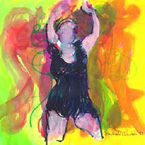
MARTI ZUCKROWV "Dance on Paper"

"Just Because"

I had the great fortune of taking dance lessons at an
early age. It feels like I was born with a passion to
move. I wished I could fly and secretly made bargains
with a God I was told did not exist. (This from my
father.) The dance classes watered the kinesthetic
seeds already stirring in my young body; I was
encouraged to discover new movements, to stretch the
limits of what my body could do. Dance was my magic,
my power to transcend.

Our family was poor and had a hard times making ends
meet. Money for dance classes was not an option.
To help pay the rent, my parents took in borders.
Serendipity or just plain luck, they rented out two
back rooms to a young, newly married couple, Ellie, a
ballet dancer, and Eddie, a composer. It was Ellie,
who recognized the fire in me and convinced my mother
to enroll me in her movement classes, fees waived,
JUST BECAUSE.

Back then, at the age of 6 and 7, I was
happy being me and happy with the girl body I
inhabited. I was at peace with myself.
Photos of me at 9 and 10 show a chubby girl, with
buckteeth and a buster brown haircut. By then, Ellie
and Eddie had moved out. Ellie kept in contact with
our family but gave up her dance classes in lieu of a
full time job. My lessons continued with another
teacher, Edith Segal, (again at no cost to my parents)
a legend in the Jewish Left Cultural world.

There I learned narrative dance, protesting war and racism and
Mc Carthy-bashing with dramatic movements rather then
words. When I danced, the freedom of my movements gave
me limitless joy. At other times though, self-
consciousness was rearing its ugly head. Discomfort
trailed me like a shadow. I learned to hold my
breath and try to make myself smaller, to take up
less space (the exact opposite of what nourished my
soul.) I don't know what triggered this destructive
behavior.

Was it my girl body with the "down there"
that I'd discovered gave me pleasure, or the shame I
felt when kids at school blasted the "pinko's" who were
trying to save the Rosenberg's and I didn't speak up
and protect my parents. Somehow the two got mixed up.
My first clear memory of hating my body is from when
I was in the sixth grade. I sat next to Frankie
Acquinita, the cutest boy in the class, the wildest
boy in the group of nogoodnicks (my mother's term) he
hung around with, and the boy I wanted to go steady
with. His interest in me was straightforward: I could
provide him with enough correct answers to a test so
that he could get a passing grade, and for that and
that reason only, he was nice to me. Of course, the
minimal attention he showed me left me with goose
bumps and fantasies of showing up to the 8th-grade
prom with him as my date.

I had all ready begun stuffing my bra with those furry
pom pom like things the girls used to wear around
their necks in the 1950's, an accessory to the pink
angora sweater sets and the gray pleated skirts so
popular in my school, but I hadn't run into
unadulterated self-hatred of my female body. I
accepted my lackluster breasts, because I knew this
was only a temporary deformity. I was fated to grow
knockers (another inherited term) like my mother and
her two sisters had.

They all cursed their huge breasts, bemoaning the fact
that finding a comfortable brassiere was impossible,
not to mention the expense.

All of a sudden, when I hit 6th grade and got assigned
the seat next to Frankie; my stomach became my enemy.
It stuck out. And my chin. It wasn't strong and
angular the way the all American blond girls in
Seventeen magazines looked as they posed in happy
groups of two and three. I had a receding chin.
Frankie's view of me in the small wooden desk on my
left was my profile. There was no way I could hide my
hideousness from him. I remember squirming in my seat
until I was reprimanded by our teacher, a short
muscular man who hated his job and let the class know
he'd rather be anywhere else.

The best solution I came up with was to place a textbook
on my belly and hold it there to hide the bulge I imagined as huge as a
whale. I placed my other hand on my puny chin and
angled my head to the right while sticking out my fake
breasts in Frankie's direction. Needless to say, this
took much concentration and refinement. Oblivious of
my intentions, Frankie's eyes landed on my test
answers, or on the paper airplanes he made and sailed
through the room whenever the opportunity arose.
Anatomically speaking, my girlfriends and I spanned
the spectrum of overdeveloped wannabe almost teenager
to scrawny flat chested tomboy. I was somewhere in the
middle: I was great at punch ball, able to outrun
many of the boys in our class, and aspired to be as
sexy as Marilyn Monroe.

Seated opposite Frankie Acquinta, self destruction
set in. I experienced a debilitating split; my mind
shouting at my body," you are disgusting." I couldn't
remember the "me" from before those words. I no
longer fit in my skin. My ugliness was oozing out all
around me and there was no where to run.
I have spent most of my 63 years battling "fat
thoughts." In many ways, dance has helped me. I
found a way to rise above my badgering mind and live
in my body. It's time for me to live in my body and
love it, JUST BECAUSE.) I hope to get there before
my time runs out.

WRITER MARTY ZUCKROWVIA IS A MONTHLY COLUMNIST FOR MYSTORYLIVES. A LIFELONG DANCER AND PERFORMANCE ARTIST, SHE NOW TEACHES MOVEMENT CLASSES TO PEOPLE WITH DISABILITIES. SHE LIVES IN CALIFORNIA.

Tuesday, March 27, 2007

"A Windbreaker Life"


By Joe Markman

I was high but there was little to be done about it. No choice really. She came prepared and I wasn’t going to let the intoxication of my chocolate-haired friend escape my grasp. When she dropped the cold curtain between us and warmed to me, I accepted her offer of fine powder and potent sex.

She had been pacing the bedroom, taking care not to look at me. A breeze sneaking through a fracture in the room’s only window hardened her nipples. I could see them through the thin fabric of her shirt. She was pondering my statement.

“I want you.”

“You want a nimble fairy with cellophane wings.”


She didn’t say anything for a while after that. She only paced, from wall to wall, taking in my slouched existence. When she finally moved within my reach there was no smile on her face, only a line of uncertain flesh. I grabbed her hips and kissed her smooth navel. But first the drug. A second thought passed through my mind, but not a third. We rocketed into the ozone and she jumped on me, a frenzy of long brown hair, tickling fingers, and moist excess.

Days later we grew tired of sex. As for the drug, the possibilities were endless.

“Where am I?”

“You’re on a grapefruit river drinking crimson souls.”

Maybe I was. All I could see were wisps of clouds, floating along and bunching together under the tender sun. I felt her nails on my bare forearm, scratching leisurely up and down. There was only the sky, her long nails, and an infinite orgasm soothing the wrinkles of my essence.

Then I died.

“Am I dead?”

“You’re on a slug-powered roller coaster gliding over bamboo rails.”

Everything had gone dark. I saw nothing, felt nothing except for my own body. I curled into a ball in the steel-trap expanse of my mind. Time dragged and I listened for clues to my encapsulation. I heard creaking wood and liquid splashes, soft wind and the ting of metal against glass. Then a white hot light scorched my eyes.

After a moment I noticed that I could see. For the first time I saw that we were on a train. The sort of train a child might ride at the amusement part, but much bigger, with room in our open-roofed car for two strangers. The strangers faded into the background when I saw myself. I was slumped on a wooden bench, my eyes half-closed. I looked down and saw a razor blade in one porcelain hand and a mirror in the other. I was cutting a pile of white powder into two lines.

“Am I you?”

“You lead a windbreaker life, confusing all you see.”

I looked at my own face, my nose wider than I remembered, my pores deeper, my lines older, my chin lower, my eyes full of strawberry worry. Light red lines crisscrossed the white globes resting beneath my eyelids. I was ugly and obscene. I chopped at the drug and blew a line. I collapsed and immediately found myself rousing from a twisted stupor.

Her breasts were pressed against the bottom of the car. They had slipped from her tangerine wrap when she fell. I noticed the strangers again. One was staring at her breasts like a lion at a gazelle. The other, his back straight, was making a visible effort not to look. I waded through the air toward her. Beef stew with no broth. I moved my slapping clown’s feet, my pillowcase juggernaut arms, to sit beside her. She awoke and we whispered nothings, ignoring the strangers.

“I love you.”

“You love the forest sky and my darkening heart.”

There was a raging fire inside her brain. In our youth she smiled at me, her doll’s eyes and coy lips burning my loins. We used to put together puzzles on the floor of my mother’s living room.

When we were twelve she looked into my eyes across a puzzle and traced her finger along my jaw, smiling as my face grew red. Now the smile was gone. Now she was frantic, grabbing me at odd moments and gazing into deep pools of invisible passion water.

It was lovely to sit next to her, away from everything, with two strangers and a plastic bag full of the only thing that mattered anymore. Then I took a line for myself and looked in the mirror.

My nose suited my face. I saw each unclogged pore, shallow laughter lines, a strong chin, and eyes that looked straight through it all. We whispered about the strangers and I held her shaking arms. From time to time she would pull away and then hold me twice as tight. It went like that for a while, both of us ignoring the warping sky, deciding on the strangers, deciding on ourselves.

She touched her face and shrieked. When she pulled the bag open I shook my head.

“You don’t need it.”

“You can see my crackling skin, my wicked eyes.”

I shook my head again.

“You are beautiful.”

“You can’t see my candy cane need and my rose petal trails.”

I shrugged and we went higher.

Waves of thick motion tracked her fingers as they brushed against my face. I saw her wicked eyes, her hesitant feelings, and threw myself at her orchid lips. The stiff stranger grunted and I felt the other move closer to us. We broke our embrace and looked at them with glee. I offered them the drug and they said nothing. Like it didn’t even exist.

I noticed the warping sky had finished its task when my head melted back onto the edge of our car. Black circles, edged with orange flames, appeared all across the sky. I stared in amazement and my lover stroked my arm. Wild ecstasy. The two strangers sat looking up, their mouths open wide, mumbling and glancing accusingly at us.

There was little to be done about it. So we enjoyed ourselves for a while, and just when it outgrew its novelty, the dragons came. I think there were aliens riding the dragons. But they could have been people, just like you and me, riding on fuzzy dreams. The dragons were strange, covered in a patchwork of lollipop hairs. As they dove toward the earth no fire shot from their mouths, but they swooped down right on top of us and pulled up at the last second.

The stiff stranger held his arms above his head when the dragons came, but straightened his jacket when they flew away. The other stranger howled in fear. He cursed the planet for its carnivore punishment and when I asked him what was the matter he jumped out of the car. It was quite the show. Exciting and tranquil and a thrashing for the nerves, but we held tight, admiring their wonderful coats and taking some of the drug when they’d gone. I asked the stiff stranger what he thought. He told me that it was a figment of his imagination, some crazy coincidence of imagery. Had they spiked his air?

We laughed and told him no. It was not for strangers. But I liked the dragons and I didn’t like his answer, so I asked my Chhaya what she thought.

“What was that?”

“Nothing is real.”

Joe Markman is a journalism student at the University of Rhode Island, where he has also found time to write fiction and poetry. "A Windbreaker Life" originated as a dream. Says Markman, "Strange stuff. I took the disjointed images and turned them into a sort of skewed 'Lucy in the Sky with Diamonds' narrative."

Friday, March 23, 2007

"Razbliuto Redux"

By Ellen Zunon

Google “razbliuto,” and you will find 1,130 references to it on the Internet. Pretty good for a word that doesn’t exist, don’t you think? In fact, a few years ago there was a real buzz on the Internet about the “word” razbliuto. Some held that it was a perfectly good word, borrowed from Russian, meaning loosely “the feeling a person has for someone he or she once loved but no longer feels the same way about.”

Others maintained adamantly that there was no such word, in either English or Russian; that it was a myth; that it should be expurgated from the writings of any decent and self-respecting wordsmith.

Columnist and lexicographer William Safire, who had cited the word in a published essay, even recanted and corrected himself in a later column, after having received a stack of letters from readers who insisted that the word simply did not exist.

Why such bilious spleen about a mere lexeme, or phantom lexeme, as one might call it? Here in the United States, we have no equivalent for the Académie Française, that group of 40 Immortals, whose charge it is to keep the French language pure by serving as linguistic gatekeepers, nixing such Americanisms as “le cash flow” or “le fast food”; one might as well try holding back the tide with a fishing net. Linguistic borrowing is here to stay. Didn’t the French give us rôti de boeuf in the Middle Ages, only to have us Anglophones hand it back to them as roast beef, which they promptly transformed into rosbif?

Didn’t we Americans borrow a multitude of words from the multicultural mix of immigrants who came here, as well as from the various Native American groups that the newcomers displaced? Mark Twain, that quintessential American writer once wrote of our homegrown variety of English, “There is no such thing as ‘the Queen’s English.’ The property has gone into the hands of a joint stock company and we own the bulk of the shares!” Doesn’t that give us the right to borrow new words where we will?

If razbliuto is not a borrowing, it must be a coinage. In that case, is it thus any less of a word than “jabberwocky,” coined by Lewis Carroll, or than IM, as in “I’ll IM you,” coined by some unknown instant message user? Our language is all the richer for these borrowings and coinages. So why not “razbliuto”? It’s certainly a useful word, if you look at all the relationship problems that abound in modern society. In fact, razbliuto is a large part of what keeps advice columnists in business.

It’s a useful concept for poets and writers, too. Take Pablo Neruda’s “Twenty Love Poems and a Song of Despair,” for example. Neruda could use a bit more razbliuto when he says, “I no longer love her, that’s certain, but maybe I love her.”

“Maybe I still love her” is no way to get over an unrequited yearning.

But the all-time World Champion of razbliuto is Marcel Proust, who wrote seven volumes as a memento of the love he had once felt for the faithless Albertine.

As for myself, about that darkly handsome Frenchman who threw me over for a girl named Angelika so many years ago, and for whom I pined for months before finally leaving France with a broken heart, I am absolutely and forevermore razbliuto. I once loved him, but I no longer feel the same way. I’ll say it three times, just to magnify its incantatory power. Razbliuto. Razbliuto. Razbliuto.

Ellen Zunon is a writer in the Capital Region of New York State.

Sunday, March 18, 2007

"Spring Shipwreck"

By Sharon Wideyew

O what do we do with
What will we do?
It is the evening of the last day.
A true friend and companion is now
standing at the cliff staring at me. With me.
When you have known someone this long, it’s hard to distinguish the
“one from the other”
condition.

I say, “Look out there, the ship is in a terribly narrow passage of dark rock and there looks to me
to be certain devastation ahead.”
And then I wipe my eyes and the dream ends, and I wake up beside my husband of 30 years
Mouth dry,
So gloomy I can barely open my eyes.
And yet I still see the cliff and the light on the ship in the distance,
Rocking between the rocks.
In my half-dream state, I whisper,
How could the ship not flounder on those rocks?
There was moonlight, yes, yes,
But there wasn’t enough of it to keep the boat afloat.

I sit up in bed.
He lies there asleep.
Outside the window, it is spring
but the winter has wandered back in
The ice clings to the heart and the hull and the sails.
A nor’easter is up and the boat is glazed, sheathed in ice now
completely socked in by the bad weather.

Ah the boat, our old old weathered ark,
It rocks in dark dark water.
And now, I get up out of bed,
And I tiptoe.
I go below, and lock myself in my cabin.
The worst thing: there is no fresh air to breathe.
There is no fresh air to cry with.
There is nothing but the rocking
And the certainty that the ship is going to crash.
And now, I come to this:
What happens happens happens.
It only matters what description we give to all of it.
We rise we fall we crash we sail.
We look for reasons.

Was that lightning that struck the ship?
Was that a fire on board that could have been extinguished?
Or was the fire extinguished so long ago we forgot where we put the matches?
Or maybe this: the captain broke the rules and brought another woman aboard.
And after a night of sex and pleasure, he lay there smoking a cigar until he felt himself sinking into
peaceful sleep.
Nothing could keep the boat safe.

Ah, but those are just the stories we might tell each other
my friend and me, standing at the cliff,
Staring out to sea.
If we cared enough to tell them.
This is our toil and our work: we keep inventing stories for why something
crashes and burns or sinks forever into the sea.
A better teaching might be this:
We might rather say the simple prayer, It is what it Is,
It is God’s will.
And please, forgive us this day, for what we need to do to keep our boats sailing.
Show us the real objective is to learn
to be content with our
Lots. As we course our way through the rough waters.

Sharon Wideyew is a penname for a writer in upstate New York.

Thursday, March 15, 2007

"People Who Aren't Really There"

By Camincha

"In my life today," my 72-year old uncle announced not long ago, "I know I can count on the radio programs that come on throughout the day."

We were sitting at the kitchen table of his home in San Bruno that gave us a bit of ocean view, drinking a cup of coffee, allowing the last bright rays of sunshine to accompany us. I was listening.

"Let me tell you," he began, "I can turn on the radio at 8:30 in the morning while I am having my coffee and toast in the kitchen and I get KCBS' objective news."

"I prefer it," he said. "I like the way they report the news. But then at nine, I turn to KGO, I sit there and listen not because of the so called show-hosts who are biased and take to insulting the callers: You must be an idiot to disagree with me. Up yours moron. No, it's not the show's hosts I like. I listen because of the callers, who bring up valid points of view."

"Other times," he said, "I listen while I do the dishes. My Rosie did them, even when she was so sick towards the end. Remember?"

He stops. He clears his throat. He continues.

"When KGO is finished, I straighten up the house. At 9:30 a.m. I turn to KDJA. They give me my horoscope and their program is kind of a nice diversion. But it can be very serious too: Yes! You, the glitzy butterfly are going to alight long enough to start a permanent relationship. At 72? That is serious!" He laughed. "That little interlude in my morning routine is always fun."

Serious or not, he smiled impishly."Well, so those are some of the things I can count on now."

We sat and talked some more, about this and that. The sun rays had turned bright red, only a few golden strands remained. And then he turned back to the radio.

"It used to be very different," he said. "My routine was: up at six a.m. At 7:00, I kissed my Rosie good-bye and I'd be on my way to work. 7:30 I¹d take the Jitney to downtown San Francisco. 7:50 I'd be at my desk, coffee in hand, having stopped at the quaint TO GO window on Fremont St. I'd be pulling the toast out of my brown bag and enjoying a few minutes to myself before everyone else came in.


"And there I would sit, working at my desk keeping an eye on my Rosie's photo smiling at me all day. A different kind of day," he chuckled.

"Today requires acceptance of the inevitable, of what has gone by, what has been. It takes imagination, some doing, to populate my hours with people who aren't really there," he said.

"But it's comforting, to hear those radio voices, even some perhaps from a world very different from mine. I hear some call from Miami where the weather is 95 degrees, to my 56 in San Francisco, or a call from Little Rock or New York or Alaska. However, all of them are people like me. They are all there, at the flip of my dial, keeping me company."


And then he slapped his thigh and laughed hard, celebrating himself.

"Yeah. Yeah they do keep me company, good company. They do," he said, chuckling.We turned just on time to see the golden disk disappear in the horizon.

Camincha is a pen name for a writer living in Pacifica, California.

Monday, March 12, 2007

"The Winter Fly"

By Ellen Zunon

I have a date with Jack Kerouac tonight. In my basement. He reads me his poetry from a 1959 recording, while Steve Allen plays a mean piano accompaniment, or Zoot Sims plays jazz sax.

While he reads, I walk. It’s still too cold to walk outside -- our upstate New York winters are lengthy and frigid -- so I walk miles and miles on my treadmill every winter. I’ve listened to other books on tape or CD while walking in the basement.

In "West With the Night," I traveled all across Africa with Beryl Markham and Baron Blixen. In "Wide Sargasso Sea," Jean Rhys introduced me to the imagined early life of Bertha, the mad wife of Mr. Rochester of Jane Eyre fame. And in "The Dharma Bums," by Kerouac, I climbed Desolation Peak in the Cascades with a fictionalized Gary Snyder and Jack.

But I like listening to poetry best of all, because it’s really written to be read out loud. And it’s even better with a musical accompaniment. Kerouac’s “Blues and Haikus” have an improvisational feel to them because that’s just what he was trying to do with his poetry: create a verbal equivalent to the spontaneous improvisations of jazz musicians.

Some of the haiku are darkly philosophical, some whimsical, but all are vivid virtual snapshots: Missing a kick at the icebox doorIt closed anyway. A dramatic saxophone phrase punctuates this haiku, and leads up to the next short poem.

Of course, Kerouac was better known for his prose, but he also wrote a lot of poetry. In fact, sometimes he combined the two genres, in a traditional Japanese format known as haibun. This consists of a passage of prose followed by a haiku that sets off the prose. Kerouac used this form in "Desolation Angels," where descriptions of his life as a fire tower guard in the high peaks of the Cascades are interspersed with haiku:

On Starvation Ridge
little sticks
Are trying to grow.

Jack studied the classic haiku of Basho, Issa and Buson before developing his own theory about what “Western Haiku” should consist of. He felt that western haiku need not conform to the traditional Japanese structure of seventeen syllables, since western languages do not have the same syllabic form as Japanese.

He proposed instead that western haiku “simply say a lot in three short lines in any western language.”Useless, useless, the heavy rainDriving into the sea. This little poem speaks volumes about despair, hope and mortality, if you know how to read between the lines. There are other things you should know about Jack Kerouac.

How he was present cheering on the crowd when Allen Ginsberg read his poem “Howl” in public for the first time, how he gave the Beats their name, and what it meant to him. How he spoke French before he knew any English, how he loved cats, how he was a genius before he killed himself with drink.

Those birds sitting
out there on the fence –
They’re all going to die.

These recordings were originally released on vinyl 78-rpm records in 1959 and 1960, and re-released on cassette tape in 1989. On the tape, Kerouac’s voice resonates in the listener’s ear as naturally as though at an intimate reading in your own living room. And it is indeed a natural spontaneous inflection, since there were no second or third takes in the recording studio.

Kerouac has no trace of a French accent, only a subtle dropping of the r at the end of certain words, as is typical of native New Englanders.

I’ve calculated that in an hour I can walk at most a mile and a half and burn 140 calories on my rickety old treadmill. A pound of fat equals 3500 calories, so I need to walk for 24 hours to burn off each of the five extra pounds of fat I’ve accumulated from eating too much comfort food over the long winter. That’s a lot of haiku. So I’m keeping my date with Kerouac tonight. When spring comes, I’ll have a date with the great outdoors.

In my medicine cabinet
the winter fly
has died of old age.

Writer Jack Kerouac would have turned 85 years old today, March 12, 2007. Ellen Zunon celebrates his birthday with this piece.

Wednesday, March 07, 2007

"Mr. Collins"


By Alan Rowland

When was the last time you tuned into any of the 'Law & Order' or 'CSI' franchises on TV?

If so, you've likely read or heard the words: "Ripped from the Headlines."

The network lawyers may have insisted on the disclaimer...'No person or events depicted here.........', and then, you know the story has been, in fact, ripped from the headlines of newspapers around the world. Or, perhaps, you're a Luddite and have actually read a book... a novel by Agatha Christie, Dorothy Sayers or even Sue Grafton or P.D. James!

Well, allow me to introduce you to Mr. Wilkie Collins, a writer and close friend of Charles Dickens in 19th Century England. Time has not been so kind to Mr. Collins, while his friend has reaped endless good fortune's love and admiration.

Mr. Dickens has been 'musicalized,' modernized, and reinterpreted; his work has won Oscars and every literary award known to men of letters. There are, quite likely, more words written about Mr. Dickens, than he could have ever written himself.

Wilkie Collins, meanwhile, sits in the somewhat more frayed, William Morris upholstered wingchair in the back of the smoking room. Collins wrote more than 35 novels; tracts on laudanum and literature; he wrote plays (more for amusement than anything else), and acted in many productions with his dear friend Dickens.

But today Wilkie Collins' more modest reputation rests upon two books: "The Moonstone" and "The Woman in White." These novels, and the major canon of Charles Dickens, were serialized, as was the fashion for the hungry reader of the day, in a weekly called "Household Words."

Readers raced for each installment, until later, when the books were published in their entirety, often illustrated by artists who came to be identified with a particular writer. Collins' books were then known as 'sensation novels', or as books 'ripped from the headlines.'

Many of his plotlines were indeed inspired by sensational headlines, often dealing with 'women's issues' like primogeniture, marriage, employment and other women's rights.

Today, Wilkie Collins is credited with 'inventing' the modern detective novel. Agatha Christie to P.D. James and countless other writers owe their debt to Wilkie Collins, and the detective stories, characters and villains he so deliciously created.


Artist and writer Alan Rowland, who lives in New Jersey, is a huge fan of Wilkie Collins' work. Once, on a visit to London, Rowland searched out and bought every book that Collins wrote which was not available in the states. The illustration of "Moonstone" is one done by Rowland, who worked as a graphic artist before he became disabled.

Saturday, March 03, 2007

"In Defense of One British 20th-Century Poet"

By Judy Staber

You Say,
from your pantechnicon of knowledge
and from your well-honed opinion,
You Say,
That ALL the major modern,
ALL the great con-tem-por-ary
Twentieth century poets
are American.
You Pound,
into our unschooled,
un-metered minds,
Their names - One By One.

And I,
Who know far less of such meters [sic] than you,
cannot intellectually disagree.
But I ask you,
please, consider
the librarian from Hull,
Who captured,
in a few well-chosen words and rhymes,
The lives and times
of the little-known and less-loved people,

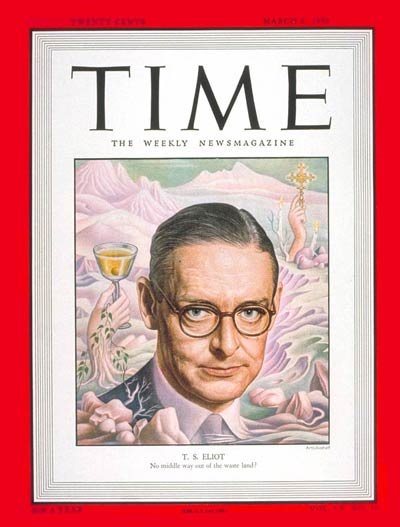
Who live, like Eliot's Prufrock,
Ordinarily,
Who pass their humdrum years
Uneventfully,
on housing estates;
In the council houses and tenements
in a land that is never boasted
in those "SEE BRITAIN NOW" posters.

They exist,
not in castles, nor in thatch and beam quaintness,
but in the flat Mid Lands.
They talk,
not in cockney nor with pear-shaped vowels.
but in dull mono tones.

And if you ever,
As I, once often did,
Ride on British Rail
Through that dull, flat,
middle part of England,
You will know
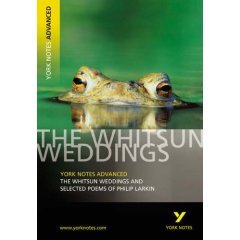
that "The Whitsun Weddings"
is a brilliant portrait
of those gray lives
Caught in passing.
Read "Here" or "Dockery and Son,"
And you will know them too.

You Who are so American,
Can praise your poets profoundly
(and justly so).
But I,
who am split across the sea,
in both my culture
and my loyalty,
I find sad memory,
Deep meaning
and exaltation
in reading Philip Larkin.

Poet Judy Staber, of Chatham, New York, formerly with the Spencertown Academy, dedicates this poem to the poet Michael Gizzi: "he taught me to love poetry and encouraged me to write, but being American was very biased in favor of American poets."

Thursday, March 01, 2007

MARTI ZUCKROWV "Dance on Paper"

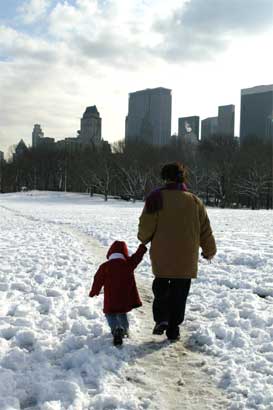
Late 1940's. The East Bronx streets, midnight on a school night, the first snowfall of the season. We'd bundle up in winter coats, wrap woolen babushkas around our heads, pull gloves on our hands, slip into galoshes and head out for Bronx Park East.

My mother and I would be the only ones out. The neighborhood was sleeping, except for us, or so it seemed to an 8-year old. We'd step out into the cold, excited as two kids, my mother already reminiscing about her short happy childhood in the streets of Odessa, Russia, before her father died and she was unable to accompany her mother to America because of failing health.

She rarely talked about that part of her childhood, the years in an orphanage, the years living with relatives who didn't want her. Bound by all our clothes, we plodded along while the snow fell as soft as cotton. It was magical to walk through the vacant lot at the end of our block,the trash and litter, the broken bottles and empty cans shimmering under the light coating of snow.

We'd make our way under the El. Even the filthy platform above our heads glistened with specks of virginal snow. Snowflakes spotted the parked cars along the curb and the fire hydrants looked statuesque, dotted with white. The bulky clothes originally weighing me down seemed to lighten on my back as we trudged ourway to the beginning of Bronx Park.

Snow would be falling faster by now and I'd lift my face to they sky and catch the flakes in my mouth. Oh, the thrill of being part of the night, the snow. I stepped out of myself and became one with something so much bigger,indefinable, but clearly in another dimension, far from everyday life. The graceful snow transformed the ordinary to spectacular.

We didn't talk much, my mother and me, as we neared the park. We didn't arguethe way we did most other times. We came close to liking each other. A blanket of snow covered the ground.

The surrounding trees and tall bushes were outlined in white, as if they'd been sprinkled with sparkly white powder. No longer were they the bare naked trees of winter, they became magnificent wonders of nature, proud and tall, the bushes beside them billowy forms of elegance.

Not daring to enter the park at night, we walked along Bronx Park East, a wide boulevard-like street that ran parallel to the park. Even the trash cans, by now covered in snow, lent magic to the night. I'd run ahead of my mother, frisky as a puppy, then leap into the air and skip back to her. Free to jump and twirl in the empty streets with the soft snow falling in my face and the cold air invigorating, I'd yank my babushka off and it became an extension of my arm.

I'd wave it over my head, then spin around and use it like a whip, imagining myself riding off into the distance on a wild stallion and I would become that wild stallion, untamed and brave and ready to conquer anything. An energy would build somewhere inside of me and move into my arms and legs and back and chest and even my neck had to find expression for the lightening surges running through me. My mother as well, moved lightheartedly through the cold. Her chunky legs and her thick peasant torso carried her down the block and away from the drudgery of her existence.

In the morning she'd drag herself out of the house and take the hour subway ride into Manhattan, standing smashed against the other garment workers bound to their factories. She'd return home each night exhausted and spent. Day after day, week after week. Year after year.

But on our walks on the snowy cold nights, she, too, could be carefree. Here it is now, 2007. My children are grown and mygrandchildren are older then I was when I walked in the snow with my mother. Now, I am the one who gets to be carefree in a child's presence. I watch my granddaughter play basketball, my little shy girl block a pass or dash across the court and make a basket and my body once again remembers the amazing feel of spontaneous movement. I stand cheering my grandson on as he wrestles his opponent down to the ground, applauding the magnificence of these two young athletes. I applaud the brilliance of the human body, the miracle of movement and kinesthetic wisdom, and the soul living within.

Writer Marty Zuckrowvia is a lifelong dancer and performance artist who teaches movement classes to people with disabilities. She lives in California.