Saturday, February 05, 2011

What Does a Hit Single Have to Do with a Baby Born Months Premature?


NOTE TO READERS: I had long known and loved the song, "Closing Time," and then, when I reconnected with a dear friend, the amazing poet Suzanne Wise, this past fall, I got to meet Jacob Slichter, the drummer from the band, Semisonic, that did the song.

Besides being a talented musician, and a really wonderful person, Jacob is my friend Suzanne's husband (they married in 2007.) He's also the author of a great book, "So You Wanna Be a Rock & Roll Star." If you've ever had fantasies about being a glamorous rock star (and even if you haven't) you really ought to read Slichter's book. You'll come away with a whole new view of rock stardom.

Slichter writes beautifully, and he takes you deep inside the often cut-throat and bizarre (and illegal!) workings of the music industry. Seeing it from Slichter's point of view is absolutely fascinating, and so often hilarious (I often laughed out loud reading, especially his descriptions of the wacky proposed "scripts" for the band"s MTV video!) Slichter has a razor-sharp eye, and a finely-tuned sense of humor. But what makes the book a real stunner is that he is willing to be so brutally honest about how the music business works, and about how deeply ambivalent a star he was.

The excerpt below tells the emotionally-wrenching tale behind the band's hit song. Just as Semisonic began producing the album that contains "Closing Time," writer Dan Wilson's wife delivered their first baby three months premature! For months they weren't at all sure that little Coco would survive. Wilson would leave the studio several times a day to visit his struggling daughter fighting for her life in the hospital.

And then, the same day that "Closing Time" hit the radio, there was another much more extraordinary celebration: Coco was finally after almost a YEAR able to leave the hospital and go HOME!

"I know who I want to take me home, I know who I want to take me home....take me home."

I'm listening to these lyrics right now and knowing the story behind the song, I am a sheet of goosebumps. My daughter, Jocelyn Kirsch, has worked long and hard in neonatal intensive care units in hospitals in Boston; I visited her once and saw babies, wired and tubed, who could fit inside a big teacup. I've also grown close to a couple of those miracle children (Jocelyn became friends with their parents!) If you knew little Sammy and Maggie, you too would celebrate. At age four, in November, 2009, they became the flower girl and the ring bearer at Jocelyn and Evan's wedding.

The parents of preemies are absolutely heroic. Dan and Diane Wilson are one such heroic couple.

Thanks Jake, and to the band, for their story. And yours. And that great song, one that is impossible to stop singing. All of your art is such a gift!

BY JACOB SLICHTER

With our time in the studio fast approaching, Dan sat John and me down and told us that there were problems with the pregnancy. Over the next few weeks, the situation worsened, and on the eve of Nick Launay’s arrival an emergency forced the doctors to deliver the baby three months early.

The baby girl, Coco, entered the world weighing eleven ounces—too small, it seemed, to survive. Dan told me that the span of her fully expanded hand, from pinky to thumb, was equal to the width of an adult fingernail.


The reports from the doctors and nurses were alternately hopeful and grim. Each hour that Coco prevailed over the odds was a victory, but a tenuous one. When Nick arrived (from Sydney, Australia), Dan gave him the news. Nick offered to postpone the recording if that’s what Dan wanted. Jim and Hans assured Dan that canceling the sessions would be no problem, but Dan and Diane decided that recording would provide Dan a welcome relief from pacing the halls of the neonatal intensive care unit. The studio was a short drive from the hospital, and he could still visit several times a day.


So we started to record our second album, which had become both an art project and an emotional lifeboat.

John and I had discovered a new studio planted in the shadows of downtown Minneapolis. The sidewalks and gutters in front of it were littered with empty bottles from the parade of customers stumbling out of the liquor store across the street. The larger building that housed the studio—an old brick structure whose rotting upper floors had been abandoned for years—was owned by the proprietor of a used-plumbing-supply store. Occasionally, his employees would knock on the door and disappear into the basement to retrieve a used toilet.


The studio itself was brand new, untested. The owner assured us it would be finished in time for us to make our record, and as we loaded in our equipment on the first day of recording, we held the door open for the painters, who emerged with their tarps, ladders, and paint buckets, leaving behind the fumes of the thick orange paint drying on the walls. Metal sculptures adorned various doorways and light fixtures. We walked through the control room, a treasure trove of vintage audio gear.

Through the paint fumes and burning incense, the faint odor of what later turned out to be a leaky sewer line seeped up through the cracks of the creaking floorboards in the main recording space. The aging structure, the vintage audio gear in the control room, the orange walls and ceilings, and the funky artwork all conformed to the studio owner’s bohemian aesthetic. He named his studio Seedy Underbelly, and we figured we were either going to make a vibey record there or perish in the building’s fiery collapse.

****

The recordings, full of personality, moved me. As I listened, however, I kept in mind Jim’s warning: “We get only one more chance.” I heard the voices of music business ghosts, past and future, telling me why our new songs might not get played on the radio.


It’s too slow.

It takes too long to build.

It’s not loud enough.


If the voices persuaded me, I spoke up, “Let’s do a faster version,” and often wondered if Dan and John had been hearing those same voices.


In the midst of all of this were the constant updates on Coco, who overcame various surgeries, fought off infections, and grew. After a few weeks, tiny as she was, she was big enough for Dan and Diane to hold, though even the best reports were shadowed by fear and anguish, and all of it seeped into the performances. The extreme fragility of Coco’s existence revealed deeper dimensions to the songs Dan had written in anticipation of having a child.

****

Dan proposed a title for the new album: Feeling Strangely Fine, a good description of our state of mind.

Months after her birth, Coco was still in the hospital, but she had grown and gained strength. Now John and I could visit her, even rock her to sleep. She was still smaller than most newborns, innocently unaware of how over the past year she had absorbed so many of our thoughts and impressed herself into the mood of our new album. Even before the trials of her birth, she had inspired some of Dan’s songs.


In late February 1998, after almost a year in the hospital, the doctors said Coco was strong enough to go home, where she would still require round-the-clock medical supervision. She left the hospital on the very day that our new single hit the airwaves. As Dan rode with Coco in the ambulance, the driver looked up into the rearview mirror.


“Hey, aren’t you in Semisonic?”


“Yeah.”


“Wow. I just heard your new song on the radio.”


It was a song Dan had written in anticipation of fatherhood, a song about being sent forth from the womb as if by a bouncer clearing out a bar.

"Closing time
Open all the doors and let you out into the world
Closing time
Turn all of the lights on over every boy and every girl...

I know who I want to take me home
I know who I want to take me home...

TAKE ME HOME..."

A NATIVE OF CHAMPAIGN, ILLINOIS, JACOB SCHLICHTER GRADUATED FROM HARVARD WITH A DEGREE IN AFRO-AMERICAN STUDIES AND HISTORY. HE HAS READ HIS ROAD DIARIES ON NPR'S MORNING EDITION. HE AND HIS MULTIPLATINUM-SELLING BAND SEMISONIC HAVE APPEARED ON THE JAY LENO, DAVID LETTERMAN, CONAN O'BRIEN, AND CRAIG KILBORN SHOWS. SLICHTER IS AT WORK ON A SECOND BOOK.

In an email this morning, Slichter wrote: Art is "not only the lifeboat, but the water, and the people in the boat. I think our creativity is what makes us who we are, and everyone from painters of masterpieces to shoe salesmen are most themselves when they engage their creativity. It's the unending mystery of how we look for and become our truest selves."

Friday, February 04, 2011

"SEEING RED," NOW in Serial Format on the Huff Po!!

The Huffington Post has revolutionized journalism in the last few years by taking over the news and news feature delivery business. (Read "The New Yorker's" excellent piece, "Out of Print," for more details on the demise of newspapers and, simultaneously, the meteoric rise of the Huff Po phenomenon!)

Now the blog has decided to venture into the fiction-publishing business! Starting this week, Seeing Red becomes the first novel ever to be serialized on The Huffington Post.

Serializing novels in a chapter-by-chapter format isn't new. Not at all. Charles Dickens and Mark Twain and many other Victorian writers published their stories in installments in weekly and monthly magazines back in the 19th century. Readers lined up to get new installments of the novels that Dickens and others wrote.

With the book publishing business in peril, and electronic books on the rise, it seems timely to try experimenting with books on a blog! We hope you'll join us in the first Huff Post blog-book!

What follows here is the first installment (the Prologue) of Seeing Red, a love story just in time for Valentine's Day.

2011-02-03-FINALCOVERSEEINGREDNOV6th.jpg

Protagonist Ronda Cari is married and the mother of two and, oh yes, she also dances flamenco! Pretty soon she has a Spanish guitarist lover named Jesús and he's got eyes -- what else, the color of melted chocolate!

But while this book's got plenty of romance, and some decidedly hot encounters, it is definitely not a romance novel. It's a story about a woman's passion for her dancing, and her discovery that art -- and friends who do art -- can help us heal from the worst of heartbreaks.

We hope you'll take a few minutes to read the Prologue. Here's a note from a reader:

"I just finished Seeing Red and I LOVED it! I had trouble putting it down, and now I'm grieving my loss because the story is over. Seeing Red is about passion, but not only the romantic kind. I followed Ronda through Spain on her journey of love and self-discovery as she explores her marriage, motherhood, infidelity, and loss, all the while nurturing a once-forgotten passion for dance that transforms and empowers her. It is impossible not to experience Ronda's joys and pain, as well as reflect on your own, due to your gift for transporting readers via accurate and vivid details, along with your depth of insight and knowledge. I was transported, both there, AND to many personal memories. I love it when an author can do that for me -- although it is very emotional and draining, I love it." -- Kellie LaCoppola, Palatine Bridge, New York

New installments will follow three times weekly, every Tuesday, Thursday and Sunday. Enjoy!

Prologue

Later, much later, Ronda came face to face with the Spanish girl. She peered into the young woman's eyes, green and full of strange glittering light.

"What could you possibly want from me?" Ronda whispered.

The girl remained silent for a moment. But her eyes bore deeply into Ronda. She fixed her sight so tightly that Ronda felt pinned, and inside her blouse, sweat sprouted across her chest and in her armpits.

Ronda turned to Hernán, the man she had hired to drive the Mercedes. "Can you please ask her?" Ronda said. "Ask the girl what she wants from me."

Hernán nodded. Straightening up, he turned to face the girl. He cleared his throat and then, bending forward slightly, he spoke a few hurried lines of Spanish, all the while gesturing with one hand toward Ronda.

The girl lifted her head. Answered slowly. And defiantly. Hernán's eyes widened. His gaze dropped to the ground. He shook his head.

"What?" Ronda insisted. "Hernán, tell me. What does she want?"

He looked up at Ronda. He said nothing at first, as if he was deciding what to say. Finally he spoke. "She wants to know, señora, if...if when you go back to the United States, if you would be willing to take the little girl. The baby, that is. With you. To...to keep."

The words hovered around Ronda's ears, but they didn't go deeply enough. She didn't hear them. Or maybe she did, but she couldn't possibly process them, not so that they made any sense. She felt them twirling around in her brain, the same way she herself had been twirling these last months, her feet and legs learning to dance the complex steps of the alegría and the bulería and the fandango.

Ronda shuddered slightly and just stared at the girl. With no warning, the girl reached out and grabbed Ronda's hands in her own grimy hands. She held on. Despite the blazing heat, the girl's fingers were sticks of ice, as frigid as the pond back in Ronda's yard in New England.

Ronda struggled to break the fierce grip, tried to pull her hands away, but the girl just held tighter. She made one giant fist out of her own hands and Ronda's, and she shook fiercely, as if she were forcing them into a pact. Ronda shuddered again and wrenching her hands free, she stepped back.

"No..." she whispered. "Never."

She gave the girl one more look: the bronzed weather-beaten face, the green eyes, pleading.

That's when she noticed. The girl's lips. How could she not have noticed before? The lips were faintly purple now, and the pallor seemed moment by moment to be getting darker.

Ronda felt her stomach tighten. She turned toward the car, and as she did, she started to feel lightheaded.

"Hernán, I really need to...leave. Right away, we need to, please. Now."
'
Immediately Hernán was beside her, opening the door of the Mercedes and Ronda, casting one last frightened look at the greenest eyes she had ever seen, slipped inside the limousine.

Stay tuned, Chapter One is coming Sunday, Feb. 6th!!

Thursday, February 03, 2011

HERE'S another serialized novel on-line, "The Beard!"

By Andersen Prunty


A very old man and a very young man sat on a west-facing porch in front of an Ohio farmhouse. The old man reminded the young man of Ernest Hemingway—full white beard, tan face, squinty eyes all screwed up like he was always looking into the sun. The young man had never read Ernest Hemingway but he had seen his face on the backs of books his parents kept around the house. The two of them sat on rocking chairs, gently rocking back and forth, slightly out of synch with one another. The old man went forward. The young man went back.

A storm brewed on the western horizon. The land was flat and they could see almost all the way to Indiana. A breeze had picked up, washing over them, blowing the old man’s thin white hair back from his reddened scalp.

The old man sniffed the air and said, “An elephant wind.”

“A what?” the boy asked.

“An elephant wind.”

The boy liked elephants. He thought about them a lot more than was probably healthy. When he was even younger he told people he wanted to be an elephant. When he grew out of that he told them he wanted an elephant as a pet. Or a whole herd of elephants. They always told him elephants would be too expensive to keep. They never told him he was ridiculous for wanting a herd of elephants. He liked the image “an elephant wind” conjured but he still didn’t have any idea what the old man was talking about.

“What’s an elephant wind?” He knew the old man wouldn’t tell him if he didn’t ask.

“That’s what the Nefarions called it.” The boy didn’t know what a Nefarion was. The old man pointed out to the horizon. “Look out there.”

The boy did. He saw gray clouds gathered on the horizon. The storm, coming toward them.

“Imagine those clouds were elephants. A whole herd of them, marching right toward us.”

The boy looked at the horizon, shifted his gaze, tried to make his vision go blurry. He forced his sight beyond the field of dancing green corn stalks. Try as he might, he couldn’t imagine the clouds as a herd of elephants. He didn’t even see the point in imagining them as a herd of elephants. The old man, he knew, was not without his quirks and odd beliefs. Sometimes he would make the boy follow him around the yard while he tried to lift things, his wiry old man body straining, all the cords and veins standing out on his neck and arms, almost always unsuccessfully. The old man had told him the stars were Native American arrow holes and before the whites had come the natives had known what it was to enjoy true darkness. He told him when grass made you itch it meant you had done something to make it angry. He said if you were asleep here it meant you were awake in China.

“I don’t see any elephants,” the boy said.

“You have to use your imagination.”

“But why would I want to imagine a herd of elephants instead of a storm?”

“Well, the Nefarions did it because theirs is a rebellious lot. Have I ever told you about the Nefarions?”

The boy shook his head. It sounded like something from one of his storybooks.

“Remind me to tell you more about them some day for theirs is an interesting history...” The old man trailed off, gazing out at the impending storm, lost in thought.

“The Nefarions, Grandpa?” the boy reminded him. The boy’s chair had stopped rocking and now he sat sideways in it, staring at the old man, listening to the wind slice itself against the cartilage of his ear.

“Oh, right. Anyway, theirs was a rebellious lot. All of their children were completely out of control. The out of control children grew to become out of control adults. But the children’s safety was very much these out of control adults’ concern. Anyway, the Nefarions live on a remote island in the Malefic Ocean...”

“I’ve never heard of that one.”

“You will, maybe, someday. Or maybe you won’t.”

The boy, as with many other things his grandfather told him, filed it away in the back of his head in the place of soon forgotten things.

“So this island in the middle of the Malefic Ocean was prone to storms a million times more violent than the ones we have here. It was rumored a bolt of lightning could shoot from the sky and cut a person clean in half if he happened to be caught out. Hair was blown from people’s heads. Skin was pushed back and frozen that way.” Here his grandfather pulled the loose skin on his face back to demonstrate, the result skeletal and terrifying. “Everything was more powerful there. But the adults couldn’t make the children understand that. A storm would come and the adults would tell the children they had better get inside and the children would laugh at them. ‘What is a storm?’ they would ask and then they would answer themselves, ‘It is nothing but wind and water and fire. These are the things of the earth. Are we supposed to fear them because they come from the sky?’ Very philosophical, those children.

“Their island was, however, home of a legendary herd of elephants, rarely seen, but large in number. One day these elephants broke free from the forest in the middle of the island and rampaged through the town, trampling everything in their path. It scared many of the children to see their parents and classmates driven into the ground by the weight of these enormous, vicious creatures. Soon, the adults thought up an idea. Whenever a storm gathered itself around the island the adults directed the children’s gaze to the gathering clouds and told them it was the elephant herd, come back to finish off the villagers. The elephants ran so fast, the adults said, they generated a wind. An elephant wind. They had the children so thoroughly convinced this was the truth that most of the children would say they could smell the elephants on the wind. Coming for them. Rampaging toward them. Hurriedly, they would retreat into their homes and hope the giant beasts were not able to desecrate their modest shacks and houses.”

The boy looked out over the corn toward the advancing clouds. Now he could see how one might mistake them for being elephants. So many shades of gray and black. Rounding curves that could be ears. Thin strands that could be tails or maybe even trunks. And all throughout the bank of clouds, the little glimmers of white tusks, eager to impale any straggling little boy. If he listened carefully, he thought he could even hear their unmistakable horn-like shouts. And, yes, if he thought about it hard enough he could even smell them—the faraway scent of straw and manure, hide heated up in the summer sun.

“I think I’m going inside,” he told his grandfather.

“Of course, here, here we don’t have any elephant winds.” The boy thought maybe his grandfather sounded a little sad about this. “Here we don’t really have anything close to magic at all. So you can stay out here as long as you want and nothing will hurt you. You might get a little wet, is all.”

But the boy couldn’t get the image of the trampling elephants out of his head.

“I’m going to go inside and have a snack.”

“Sure. Sure. I’ll be in in a few minutes.”

The boy knew this was a lie. His grandfather was a weather enthusiast and any time there was anything out of the ordinary in the sky which, in Ohio, was just about every day, he would be out in it, looking at the horizon or up toward the heavens. Once inside, the boy made a peanut butter and marshmallow fluff sandwich and sat down on a chair in the living room. Two large picture windows looked out over the cornfield, toward the approaching storm. He wondered where his parents were. They often left for hours at a time, taking his sister with them, and returning after he went to bed. After eating his sandwich and turning on the television, the boy must have dozed off.

He awoke to what could only be the trumpeting of elephants. Standing up, he ran to the window and watched wide-eyed as something strange and horrific unfolded in front of him.

His grandfather stood in the front yard, clothes flapping around his skinny body, hair swirling around his huge head, arms thrust up toward the heavens. Rain fell from the sky, huge fat drops, turning everything gray. Thunder rumbled under his feet. Lightning slashed the sky. And from everywhere he could hear the trumpeting of the elephants.

Then he saw them tearing through the cornfield. Dividing as they reached his grandfather. Hundreds of them. The boy grew very worried about his grandfather. He went to the door and opened it. The wind nearly ripped the storm door from its hinges.

“Grandpa!” the boy shouted.

The old man was oblivious. It looked like he was confronting the gods and, if so, it was a confrontation he lost. The sky darkened. Rain pelted off the backs of the pachyderm parade, swirling around his grandfather. Lightning strobed the dark day bright and, like that, his grandfather was gone. The boy sat down on the same chair he had fallen asleep in and cried.

Later, he would often think he had been depressed from that point onward.
Writer Andersen Prunty lives in Dayton, Ohio. He is the author of several novels, including ZEROSTRATA, THE BEARD, MORNING IS DEAD, and MY FAKE WAR. You can visit him on the web at www.andersenprunty.com. Read more of The Beard here.


Wednesday, February 02, 2011

NEW Harvard Research Shows that Mindfulness Meditation Produces Positive PHYSICAL Changes in the Brain!!

The word is out. Just about every day, a new article appears celebrating the positive effects of mindfulness and meditation.

Last week, The New York Times featured an article by a woman writing about her husband's discovery of mindfulness meditation.

Technically the class he took was called "Mindfulness-Based Stress Reduction," or MBSR. MBSR was developed at the UMass Medical Center some 30 years ago by then Professsor of Medicine Jon Kabat-Zinn, who used the mindfulness training to treat patients with chronic pain, stress and depression. In the last three decades, thousands of people have been helped by the program and training that Kabat-Zinn developed.

MBSR meditation features prominently in the Happiness class that I am teaching for the first time this semester at SUNY Albany. Students are taking MBSR with nurse trainer Lenore Flynn in a mandatory Wednesday afternoon lab (that's in addition to the three class meeting times.)

Flynn worked with three of my students in an independent study in the Fall of 2010 (a test run for the new class!) The results were quite remarkable. One student, psychology major Allyson Pashko, had been suffering from such intense stress a year ago that she was physically ill (and hospitalized.) Doctors could not figure out what exactly was wrong with her. Allyson is a new person today. She emailed me last week out of the blue to report that she is still seeing the positive effects of the mindfulness work she did last fall. This is an excerpt from her email:
"Now for the great news, I actually ended up recieving a job offer a couple of weeks ago with a Long Island company that offers learning processes... I just started training this week and I believe I will go through about 2 weeks of full-time training and then observations to make sure I really understand the program. It is such a great place and I can't be more excited!

Now for the best part, when I went in for the interview, the last thing the director said to me was, "well you seem like a very positive person, I'm sure you will be a great fit!" I thought to myself WOW! I can't believe that someone had actually said that to me. I thought back to all of the work we had done last semester and it really helped me so much!

I just wanted to share with you my wonderful experience and say that I'm not sure this all would have been possible without all of your continued help. I hope you can share my story with your students and it will encourage them to really work to their fullest and understand that this class really makes wonders happen."

In the Times article, the writer said that her husband had gone on a ten-day MSBR retreat. "Not my idea of fun," she said, "But he came back rejuvenated and energetic." Indeed, he was so transformed by the experience he decided to start meditating an hour in the morning and an hour every evening. The writer added:

"I’ll admit I’m a skeptic."

Meanwhile, though, she pointed to a new study, not the first, which suggests that 8 weeks of meditation can produce important physical improvements in the brain that lead to more well-being in life!

The Harvard research suggests that individuals who meditated for about 30 minutes a day for eight weeks had measurable changes in gray-matter density in the gray matter of the hippocampus (associated with increased learning and memory) and importantly, a reduction of gray matter in the amygdala, that chunk of the brain associated with anxiety and stress! The control group showed no such changes.

The study appeared in the Jan. 30 issue of Psychiatry Research: Neuroimaging.

The fact that only eight weeks of meditation produced brain changes that could be detected by MRI imaging is remarkable. What does this suggest for individuals who, like the husband of the The New York Times writer, are committed to trying to make mindfulness meditation part of their regular practice? Quite ironically, as I am writing this post, I hear my own husband upstairs. He just started chanting the "om" that signals the start of his own meditation. He's been meditating for almost four years now. He started during a time of great stress; he came home one day and I had set up a small meditation space for him in the bedroom, a quilt on the floor, a small table and a candle. (Later he got rid of the table, and we bought him a fancy round pillow.)

Try it? Take a class!

To all those people who are contemplating trying meditation, I say, go for it. Don't start by trying for half an hour though. To start, set a timer for say, five or eight minutes max.

Perhaps the best way to start is to take a class; it helps to have regular instruction and the support of a trained teacher and a group of people around you.

Meditation has changed my life profoundly. It has helped me to live without anti-depressant medication, and that is something I never ever thought would be possible. It's also given me enormous energy. (People keep asking me how I write so much; I tell them I have a lot of energy and I credit meditation.) It's not just that you feel more relaxed sitting on the mat, focusing on breathing in and out. IT'S OFF THE MAT THAT YOU SEE GREAT CHANGES TOO!

All through the day when life throws its wrenches my way, I stop and take in a long slow breath and say, OK, just let it go. Just stay focused. Just realize that "this too shall pass" (one of my Mom's favorite quotes!) The meditation practice I started in 1996 has helped me see life in a different way. It has showed me how to find joy even in the weirdest small moments when you wouldn't otherwise expect to find joy!

This winter for example, I am like most folks, not loving all the snowstorms and the fierce cold. But I'm watching (being mindful) of my reactions to the incessant snowfall. All I can say is, I am not going totally crazy.

I tell myself, "it is what it is. It will be what it will be." I get nervous looking at that block of ice, now approaching two feet in thickness on the porch roof. I start to worry that it might bust up the roof. I breathe. I say. Whatever it will be (I also take the roof rake to it!)

But if the worst happens and the ice wrecks the roof, and it starts leaking, well, so be it. We will deal. We will get the roof repaired.

Yesterday I was trying to cross the backyard to bring the compost outdoors. I wasn't even trying for the spot we've got set aside back behind the garage. Much too far, and way too much snow. No, I had decided to go just to the edge of the yard beyond the old apple tree.

It was so exhausting, sinking deep into drifts with each step. Finally, half-way to my goal, I collapsed, and just sat there, me and the compost container, sunk in the snow. I started to laugh. I found this bizarre situation comical. Instead of being annoyed and angry about being trapped by snow, I said to myself, hey, might as well accept it. It's just...snow. It will eventually go away and spring will come and all those hundreds of tulip and daffodil bulbs will come poking up out of the lawn.

I struggled up out of the snow and trudged the rest of the way across the backyard.

Mindfulness has taught me to let go and stop resisting whatever it is that I am fighting. I'm also learning to stop complaining and whining about this and that. I've learned to try to find the smallest moments of joy in whatever it is I am doing. In our first mindfulness class last week, Lenore Flynn led us through the "raisin-eating" experience (famous in MBSR-training.) You take a couple of raisins in your hand and you pretend that you've just arrived from another planet and you've never seen raisins before.

You spend long minutes just staring at those raisins. You look at the shape and the color and the texture and the minute wrinkles.

Then, just when you think you can't stand another minute of raisin-contemplation, you start to feel them with your fingers. And then you slip them in your mouth. But no eating -- you feel how the raisins feel in your mouth, on your tongue.

In other words, you become mindful of what it feels like to eat a raisin.

All week since that class I have been much more mindful of what I've eaten. Interestingly, some practitioners are using mindfulness with diets and food disorders. Making people more mindful about what they eat helps people to slow way down and to appreciate every morsel of food that they put into their mouths. This kind of food-related mindfulness training tends to get people to eat less and enjoy food more.

There are also specific mindfulness classes designed to help depression.

Well, so, mindfulness, like life, isn't perfect. It doesn't always work. I still curse and get frustrated and angry. But I can pull myself back from the brink. I can think myself out of dark corners. I can live with what happens.

To the skeptical New York Times writer (her name is Sindya N. Bhanoo), I have two things to say: thank you SO much for writing this article. And very humbly and respectfully I would add: try joining your husband. Try meditating!

P.S. I also want to thank my husband for forwarding The New York Times link about Bhanoo's article to me; in forwarding it, he told me that this article was one of the most frequently viewed on the Times site! Now that is quite remarkable. And is it any wonder! We have the capability of changing our brains for the better! What a great message!

Tuesday, February 01, 2011

A "Novel" Way to read a "Novel" -- "Seeing Red" to become the First Serialized Novel on The Huffington Post


Charles Dickens did it. So did Mark Twain, with both Tom Sawyer and Huckleberry Finn!

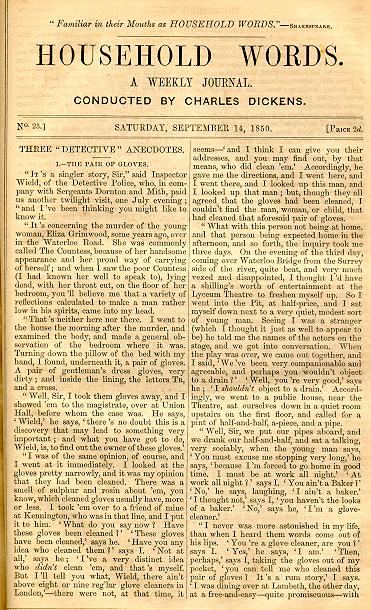
Back in the Victorian era, many writers published their fiction chapter by chapter, in monthly or weekly magazines like "Household Words."

Readers LOVED the stories.

Readers flocked to buy the weeklies.

Dickens' good friend Wilkie Collins was so popular after he started writing The Woman in White -- an epistolary novel considered to be one of the first MYSTERY or detective novels -- that readers lined up to buy the next installment!

Among other writers who published in serialized format in the 19th century: George Eliot, Elizabeth Gaskell, Thomas Hardy, George Meredith and Robert Louis Stevenson. Later, much of Joseph Conrad's fiction was first published in British and American periodicals (Both Lord Jim and Heart of Darkness was serialized in three parts in Blackwood's Magazine.


THE HUFF PO IS AT THE FOREFRONT OF THE PUBLISHING REVOLUTION!!


Just as the Huff Po is helping to revolutionize journalism by taking over the news and news feature delivery business, the blog has now decided to venture into the story publishing business!

We are in the throes of a publishing revolution. As book publishing is changing in monumental ways, it seems time, and timely, to try the serialization format again, only this time, the "household words" will be electronic!

Starting this week, my new novel, Seeing Red, will become the first novel ever to be serialized on the Huff Po.

Seeing Red is a love story, and it takes the reader on a wild adventure across the warm and sunny and very romantic region of southern Spain known as Andalucía (a wonderful time of year to get away to Spain :)!!

It's a love story just in time for Valentine's Day.

But it's much more than a love story. It's a story of discovery. It's a woman's journey to find herself as an artist, and her slow and often painful realization that even though she adores her guitarist lover Jesús, and even though she has chased him half-way across the globe (he has those eyes like melted chocolate!) in the end, she doesn't need him to be happy.

As I say in the promo for the book on the Seeing Red website, Ronda Cari spends half a lifetime searching for true love, and then she discovers it, in the magic of her own (flamenco) dancing!

The Huffington Post isn't alone dabbling in serialized fiction online. A group of science fiction writers are hard at work composing

billed as a "rip-roaring adventure tale set in 1241." According to its writers, Mongoliad.com is not only exciting reading, it's "also the beginning of an experiment in storytelling, technology, and community-driven creativity."

It's an experiment worth pursuing!

Books in print may disappear someday.

But stories never will. As I say in my other experimental online book, the "blogga saga" Sister Mysteries, stories are what make us human.

Storytelling is as old as human beings; stories are how we make sense of the world and its chaos.

So get ready for another experiment in storytelling and digital technology! We hope you'll be a regular reader -- if you want to sign up to receive notices of new chapters of Seeing Red, email My_Story_Lives@yahoo.com.

Follow Claudia Ricci on Twitter: www.twitter.com/RicciCJ


This post appeared first on The Huffington Post.