Saturday, October 15, 2011

"The Glove"


By Kyle Easton

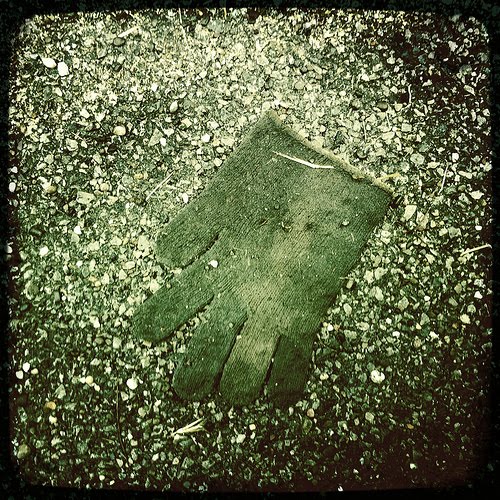
The glove slipped from my hand
Falling to the pavement
Where it lay
Transformed
From a thing warm and loved
My friend
To a thing cold and dirty and forlorn
Evoking an involuntary feeling of disgust
First at it
And then at myself
How quick we are
To turn upon the things we love
When they fall and are made ugly by the world
Disgust turns to sadness
As my thoughts turn from the glove
To the nature of life
And what a disappointing thing it can be
I heave a sigh, pick it up, and put it on
For a moment it feels cold and foreign
But soon it is warm again
It remembers the shape of my hand

Writer Kyle Easton was born and raised in upstate New York, where he still lives. He attended Bates College.

Thursday, October 13, 2011

A Star Shaped Like Africa -- A Story Out of the Dominican Republic!!


By Kiara Rodriguez

It was hot, humid even, but beautiful. I awoke to the beautiful smell of pancakes, chocolate to be exact. My eyes opened and next to me was my cousin, Arlyn. I looked at her and smiled; we were both thinking the same thing, “what did my grandmother cook for us today?”

We sprinted up to the thought and quickly walked to the semi-outdoor dining room. The hot Dominican Republic air hit our faces, along with the smell of pancakes, eggs, bacon, sausage, and fresh homemade cherry, mango, and chinola (passion fruit) juice.

Every morning was different, but today was my favorite. Today was going to be great.

You can always tell how the day is going to go according to breakfast.

A big breakfast always meant a day of adventures, fun and new family members. A small breakfast meant staying in the pueblo or the house relaxing.

Soup always meant we were going to El Verde, my grandmother’s farm five miles away from where she lived. As we chowed down our food we wondered: where we were going, what was going to happen and what my grandmother thinking? We never knew what she was thinking. She’s very spontaneous.

After breakfast we ran to shower. Although there were two bathrooms, it always took over an hour considering there were 4 families staying in my grandmother’s house that summer. Dressed and ready to go, all the cousins had on bathing suits and shorts and the aunts and uncles all dressed in normal clothing.

It was too hot for normal clothing -- it didn’t make sense. We waited as the two pickup trucks pulled up. We ran towards the trucks, so excited, only to feel the scorching hot metal against our bare skin.

“Put the towels down, hurry,” one of us yelled, while the rest of us ooo’d and ahh’d at the intense heat.

It was a bumpy ride, with sharp turns, and outrageous stops that sent us all flying forward. I thought I would fall off the edge of the truck. I guess that’s why they never let the little kids sit on the edge, only in the middle. I insisted I wasn’t a child, that I deserved to sit on the edge after I was nine. We finally arrived at our destination. It was a campo, but not El Verde.

We were in Hajaco.

Hajaco is filled with coconut trees, platano trees, grass and gravel everywhere. I used to call it the campo with the cows, because everywhere you turned there was a cow. It was mosquito central and I was mosquito bait! It's like all the mosquitos got together one day and decided “Hey, we're ganna bite Kiara today!”

My aunt had a house there and most weeks we would drive up to her house to eat a pig that my family brutally murdered that same day. I swear I had no idea they killed the animals themselves when I was eating it!

My cousins and I loved to ride pasolas, what Americans call motorscooters; every time we saw one we would hop on and pretend we were driving it. The hot air would blow in our faces while our hair flowed in the wind. “VAROOM, VAROOMM,” I would say as the best nine-year old driver you have ever seen.

“Hey Arlyn, where do you wanna go today?”

We always loved to hop into any transportation device and pretend it was our limo. Our mothers were sitting in the seats surrounding the pasola talking and gossiping in Spanish about things no child should care about, and so we paid no mind to the things they said. Who knew it might be important to out safety.

“Kiara, tenga cuidado con el motor, que to caliente!” Which by the way translates to “Kiara, be careful with the motor it’s hot!”

But of course as a nine-year old, I paid no mind to the words coming out of my mother’s mouth. I simply didn’t care! Just imagine her words going in one ear and literally right out the other.

I continued riding my pasola down the highway, through the trees, past the cows, over the hill; yeah I had a great imagination! I swerved side to side, turned corners, jumped over potholes, and said hi to everyone who passed, nodding my head at them and yelling to them “Ay, amigito, que lo que.”

I believed I was actually riding the scooter! And suddenly my travels came to a quick end. It was time to eat.

I should have checked the bike out before I got off; I should have checked what side I was getting off, I should have made sure the motor wasn’t on the side I was getting off. But I didn’t hear my mother’s warning, I didn’t care because I was sure that I knew what I was doing.

I hopped off the scooter only to feel an excruciating pain on my right leg. Falling to the ground I couldn’t help but think of the words my mother had said to me, “Watch out for the motor!” The pain was insane, like getting burned by an iron (which also happened to me to, but that’s another story).

I yelled, rather screeched at the touch of the roasting, blazing, blistering, flaming hot motor against my skin. Crying, I could hear the sound of my mother yelling at me, my father yelling at her and my aunts and uncles laughing. I was humiliated, hurt, and sad I didn’t know what to do!

And suddenly I was being picked up by my uncle and brought to a room. Still crying, I watched everyone around me panicking and deciding what they could do to help my leg. I looked down and saw a huge brown patch of my skin slowly peeling off; the sight of this brought more tears to my eyes.

“Get the aloe, put it on her skin to ease the burn!” I heard someone yell that, but I didn’t understand what putting aloe on my burn would do for me until I saw them breaking the plant in half. There was a slimy, sticky, cold, insanely cold substance coming out of the aloe.

“Here, put this on your leg.” I didn’t get what it would do for me but I listened because all I wanted was to stop the pain, make it all go away. I cried for hours while my cousins laughed and all I could do was cry. I watched the patch of skin turn brown, it was bubbly it was painful. I can remember the pain like it was yesterday!

I look at the scar now and the memory returns; it hits me like a bat hits a ball. I remember every detail of that day, breakfast, the ride, the laughs and the pain. I guess the day was not as great as the breakfast said it would be. I look at the scar on my right leg in the shape of Africa and I smile at how strong the pain has made me!

Kiara Rodriguez is a freshman at the University at Albany, State University of New York. Born in Brooklyn N.Y, she moved to the Dominican Republic when she was a year old and was there for about a year. Her parents are from a small city in the Dominican Republic called Bonao. Kiara grew up in the Bedford Stuyvesant area of New York and then lived in Ridgewood, New York for most of her life. She intends to major in Communications and Journalism and wants to become a magazine editor.
Tuesday, October 11, 2011

"The Runaway Pink Ball," a new children's book!!


Artist Charlotte Sear will sign copies of her new children's book, "The Runaway Pink Ball," on Saturday, October 22nd from 1 to 3 p.m. at the Chatham bookstore, located at 27 Main Street in Chatham, New York. Ms. Sear is a working artist and a professor of reading at Long Island University and the New York Institute of Technology.

"The Runaway Pink Ball" tells the story of a pink ball that rolls away from a little girl. The ball discovers that it wants to be free. After numerous adventures, however, the ball realizes that it’s lonely and wants to return to the little girl, who wants to keep it for her own.

The brightly-colored illustrations are in gouache and collage. The book is aimed at a preschool audience as a read-aloud. The word repetition within the text makes the story appropriate for beginning readers.

Ms Sear said that she was inspired to write the book after inventing the story for her granddaughter, Marissa, who is now 11. The author and her granddaughter used to play with a pink ball when the little girl was four years old. Whenever the ball rolled out of sight she would say "it's hiding."

Monday, October 10, 2011

The Miracle Cream


By Justine Wright​

 
“Why did you have to have black people hair?” my mother says with disgust on her face.  I stand there trying to answer the question, but I don’t know what black people hair is?

Maybe it’s the tangles of these curls or the kinky thickness of my hair that can’t be tamed. She gossips with her friends about how ugly, difficult and horrible my hair is. I hate it; I hate how everyone has that same look on their face. It's as if I’m cursed.

​I find myself walking around the corner to this “salon.”

A big lady stands in front of me with these piercing eyes of hatred. She hates my hair and I think she hates me for being cursed with these locks. “I’m going to need a lot of relaxer for this one,” she declares.

She places a big bottle of this white mayonnaise-looking substance on the desk.  I feel the comb ripping four lines on my head. She’s in the jungle fighting the beast that is my hair.  This mayonnaise smells foul. It’s plastered across my scalp; my head is on fire and it burns.  

​Sitting alone on this high chair, with flames riding across my scalp, the tears are washing my face. I’m begging for water to wash this acid out of me. Every minute feels like an hour. The pain is penetrating, sinking toward my cortex.  After an hour of minutes, I’m rushed to the sink. There my dehydration is given the water it needs.

​The mirror looks at me and I see a different person. Her hair is straight and it looks longer than it was earlier.  The weight of the hair resting on her head is lighter.  I can’t believe that she is me. This miracle cream stripped the ugliness out of my hair. But it wasn’t over yet; after another hour of sitting impatiently on a pillow that brings my head to the dryer, I’m released from the punishment of having “black people hair.”

​Big bouncy curls fall from the rollers that construct them. Everyone in the salon is staring at my hair. “Ay, que Linda!” they keep repeating. These Spanish people in this salon finally accept my hair. “Now you look like your father’s mother, too bad you didn’t get her eye color.” I guess all the pretty traits that I don’t have just make me unfavorable to her.

​We’re walking through the street; my hair is long and flowing in the wind. I never knew it would be able to reach my waist. It's pretty, at least that’s what everyone in the street is saying to this short six-year-old girl.  I feel so beautiful. For once I love my hair. In this moment I’m glad that the mayonnaise burned the “black people hair" out of me. I run upstairs and play with my hair in the mirror; it’s so soft I can run my fingers through it.  

I am swaying my hair back and forth when my mother walks into the room. She is looking at me looking at myself in the mirror and then she says, “You’re not pretty so stop smiling.”

Writer Justine Wright, who grew up in the Bronx, is a freshman at the University at Albany, State University of New York. She plans to be a biology major.

Sunday, October 09, 2011

With the Wall Street Protest, We are in Uncharted Waters


By Alexander Prisant

There is no precedent for the occupation of Wall Street. America has never engaged in class warfare. We consciously decided NOT to follow the British during the Industrial Revolution--when American Labor unions deliberately decided to be the only nation on earth to celebrate the working man in September, not on Labor Day;
when the Democrats decided not to become the Labor Party.

After all, why divide into classes when there was ubiquitous socio-economic mobility? But suddenly that is gone. Suddenly we have the severe economic inequality of 1910. That's right, 1910. The whole middle class advance, post World War II, has been wiped away in a decade.

The unsurprising result: only 20% of the nation believe there is an upwardly mobile future--for themselves or the country. Americans are beginning to take stock. And take sides.

Before now, references to rich and poor were simply occasional throwaway lines in political bombast. Now they are the crude labels around which society is coalescing and dividing.

If you doubt it, read yesterday's statement from Vice President Biden. To the best of my memory, no one form the White House--certainly not in the depths of the Great Depression--ever made a public statement like this. We are entering uncharted waters.

Vice President Joe Biden expressed empathy for the "Occupy Wall Street" protesters in New York and elsewhere who are pushing for a radical overhaul of U.S. institutions and government, saying the American system has run amok and is no longer fair for the vast majority of Americans.

Asked if he and President Obama stood in solidarity with protesters in lower Manhattan,Biden said it was a "really fair question" and then did not directly answer it.

"What is the core of that protest?" Biden asked rhetorically. "The core is the American people do not think the system is fair or on the level."

The vice president noted that the conservative Tea Party wing of the Republican party emerged from anger at President George W. Bush's bailout of the financial system three years ago and many Americans from the opposite side of the political spectrum are feeling that same anger toward the banks

"Look guys the bargain is not on the level anymore in the minds of the vast majority of the American (people) the middle class has been screwed," Biden said.

He cited the public outrage over a recent decision by Bank of America to impose a $5 fee for consumers to use their debit card demonstrates that anger.

Biden said "The American people know... the reason the CEO of the Bank of America" is still in business is because "the guy making $50,000 bucks bailed him out. Bailed him out."

Bank of America is "incredibly tone deaf at a minimum. At a maximum, they are not, they are not, paying their fair share of the bargain here. And middle class people are getting screwed," Biden said.

Writer Alexander "Sandy" Prisant, formerly a management consultant who worked in many parts of the world, lives in Florida with his wife, Susan. He is writing a series called "The Journey We Take Alone?" on MyStoryLives, a project that deals with the life-threatening illness he is facing. Today's post appeared first on his blog, Wordsmith Wars.

Saturday, October 08, 2011

The Miracle Cream


By Justine Wright​

 
“Why did you have to have black people hair?” my mother says with disgust on her face.  I stand there trying to answer the question, but I don’t know what black people hair is?

Maybe it’s the tangles of these curls or the kinky thickness of my hair that can’t be tamed. She gossips with her friends about how ugly, difficult and horrible my hair is. I hate it; I hate how everyone has that same look on their face. It's as if I’m cursed.

​I find myself walking around the corner to this “salon.”

A big lady stands in front of me with these piercing eyes of hatred. She hates my hair and I think she hates me for being cursed with these locks. “I’m going to need a lot of relaxer for this one,” she declares.

She places a big bottle of this white mayonnaise-looking substance on the desk.  I feel the comb ripping four lines on my head. She’s in the jungle fighting the beast that is my hair.  This mayonnaise smells foul. It’s plastered across my scalp; my head is on fire and it burns.  

​Sitting alone on this high chair, with flames riding across my scalp, the tears are washing my face. I’m begging for water to wash this acid out of me. Every minute feels like an hour. The pain is penetrating, sinking toward my cortex.  After an hour of minutes, I’m rushed to the sink. There my dehydration is given the water it needs.

​The mirror looks at me and I see a different person. Her hair is straight and it looks longer than it was earlier.  The weight of the hair resting on her head is lighter.  I can’t believe that she is me. This miracle cream stripped the ugliness out of my hair. But it wasn’t over yet; after another hour of sitting impatiently on a pillow that brings my head to the dryer, I’m released from the punishment of having “black people hair.”

​Big bouncy curls fall from the rollers that construct them. Everyone in the salon is staring at my hair. “Ay, que Linda!” they keep repeating. These Spanish people in this salon finally accept my hair. “Now you look like your father’s mother, too bad you didn’t get her eye color.” I guess all the pretty traits that I don’t have just make me unfavorable to her.

​We’re walking through the street; my hair is long and flowing in the wind. I never knew it would be able to reach my waist. It's pretty, at least that’s what everyone in the street is saying to this short six-year-old girl.  I feel so beautiful. For once I love my hair. In this moment I’m glad that the mayonnaise burned the “black people hair" out of me. I run upstairs and play with my hair in the mirror; it’s so soft I can run my fingers through it.  

I am swaying my hair back and forth when my mother walks into the room. She is looking at me looking at myself in the mirror and then she says, “You’re not pretty so stop smiling.”

Writer Justine Wright, who grew up in the Bronx, is a freshman at the University at Albany, State University of New York. She plans to be a biology major.

Friday, October 07, 2011

"Now My Garden"


By Anjana Deshpande

She didn’t have to, but she introduced
me to the lilac, that afternoon.
pulled a branch towards me,
taught me the lilac scent.

And that’s my basil…
And my tomatoes are in the cage
because hungry deer nibble at it.
And those are my peonies …
she opened her hands,
flat and wide,
how does one explain peonies ?

Then the azalea bushes,
and some others (I forgot which)
that had pricked her son
when he planted them.

And then there was the lavender.

She crushed some,
and held out a
fragrant palm.

There, under a maple,
leaving the men to their talks
of basement leaks
and attic insulation

she stood in the garden
helping me grow roots.

Writer Anjana Deshpande is a Licensed Social Worker and a Certified Poetry Therapist who recently founded the "Center for Therapeutic Writing." As a therapist, Anjana works with a wide variety of individuals, including veterans, to help empower them through poetry and other writing. She has published papers on her work with the veterans and the elderly, and has given several workshops on the transformative powers of writing. She makes her home outside Philadelphia with her husband and two children.

Thursday, October 06, 2011

Wall Street Protest -- A Cry for Campaign Finance Reform?


By Claudia Ricci

This post appeared first on Wednesday, October 5, 2011 on the Huffington Post.


Is it any wonder that the Wall Street occupation is capturing the country's attention? Who among us isn't deeply frustrated and fearful and just plain fed up? The fact is, everyone has had it with the recession that's never gone away. There's no end in sight to the housing crisis or to our record levels of unemployment. Too many people just don't have jobs, nor do they have any confidence or hope of getting reemployed in the future. It feels like everywhere you turn, the news is pitiful.

Meanwhile, government is in perpetual gridlock. Cynicism seems only too reasonable: too often legislators talk a good game when they are running. But then they get into office, and everything just stays the same.

Three years ago, the nation went to the polls amidst a wild outpouring of support for a silver-tongued man who seemed capable of making a real difference in the White House. He was elected by record numbers of first-time voters and with a giddy enthusiasm from young and old people alike -- we hadn't seen the likes of it in decades. The country seemed poised on the edge of a new progressive era.

Soon enough, though, it became clear that was all an illusion. What was that Obama used to say about hope? Hard to remember. Obama went back and forth -- one day standing up to the banks and insurance companies -- the next day giving in to the big money that's captured both political parties. Some of us feel like such demoralized dopes for believing that a candidate could really act tough against corporate money.

Like the rest of us, the "kids" are rather desperate, and looking for hope. They represent a generation that faces a dismal, if not completely hopeless, job market. Sure, there is theater and theatrics in the occupation, but at heart, the protesters are saying very serious things, things that everyone should already know: that the economic and political systems in this country are broken and profoundly unfair and flawed at their very heart.

The protesters have been criticized for not articulating their demands, but if you ask any of them why they are there, they are pretty damn clear in delivering a coherent and compelling message. They articulate what everybody knows to be true: too often, it's the big bucks corporations -- now regarded under the law as individuals entitled to free speech and other human rights -- that dictate law-making and governing in this country. It's the big banks, the big insurance companies, the big stockbrokers, etc. etc. who call the shots, and who have got Congress' and the president's ear.

Corporations wield way too much power and steer our country, while the rest of us are powerless. We sit back and suffer the consequences.

So now what? While the protest stirs up at Wall Street's doorstep, the only meaningful way to fix the system is to initiate serious campaign finance reform at all levels of government. In other words, we must institute changes that will enable us to elect individuals who are not beholden to large corporate interests.

Is that possible? Is there a set of legislators out there ready to lead the fight to bring fundamental reform to the way we elect our leaders? And if so, might it be time for them to step forward to lead the protesters toward this constructive change?

Tuesday, October 04, 2011

Stuck in an Elevator -- Please, Let me Live On the First Floor!


By Lexus Ulter

Everyone has fears and most of the time, people say, “Face your fears.”

All I can say to that is "Hell No!"

If I’m scared of something I stay as far as I can away from it. One fear I have is elevators, but since I live on the 13th floor in Mohawk Tower on the SUNY campus, I can’t stay away from the elevator.

When I was first assigned my room on the 13th floor, I kept telling myself I would take the stairs up now and then, but somehow I never do. I never really thought that I would get stuck in the elevator. But then one day, it happened.

I, Lexus L. Ulter, got stuck in the elevator.

I remember it like it was yesterday, why? because it WAS yesterday! It was nine o’ clock in the morning and I still had 10 minutes to get to class. It was a day like no other; I woke up on time, took a shower, brushed my teeth and got dressed. Before I left I sprayed a little perfume on me -- it smelled like baby powder. As I waited, I thought about being late to class. I could get marked absent and I didn’t want that to happen, so I pushed the elevator button a second time, as if that somehow would make it come faster. It didn’t.

I got in the elevator and there was a girl already inside. I had never seen her before. The elevator door closed and dropped down a few stops and another girl came in, I had never seen her either. The elevator started to move again, at its slow pace. The elevator read “2” and was heading toward "1." The elevator bounced a little and stopped, and then the alarm went off. The doors didn’t open and every button on the elevator was lit up.

That’s when I realized that I was officially stuck in the elevator. I was so pissed off because one, I’m terrified of elevators and two, I didn’t have service to call someone and tell them I was going to be late to class because I was stuck in the elevator. Three girls that didn’t know each other were stuck in an elevator with no escape.

I turned to look at the other two girls. I could almost smell the fear from them; they were as scared as me. The air in the elevator felt as if it was getting thinner every minute. I started to feel as if I could barely breathe. The alarm made me feel more scared than ever, I wished it would turn off but it never did. I recalled something scary my uncle had once told me, “An elevator will never drop unless the wire is cut. Aside from that, it will only shoot up.” Who wouldn’t be scared by that?

One of the girls panicked. So just kept pressing the alarm button as many times as she could, then she started to try to read the directions for “If You Get Stuck in The Elevator.” We all squinted to try to read it but we couldn't because some idiot had scratched the paper up.

We pressed the “Call” button and we heard ringing, then someone picked up, but we couldn’t hear a word they said, because the stupid alarm wouldn’t shut up. So we yelled. We yelled, “WE ARE STUCK IN THE MOHAWK TOWER ELEVATOR AND WE ARE ON THE FIRST FLOOR!!”

The person on the other end sounded like they were mumbling something and hung up. We thought we were screwed. We started a little conversation; we all introduced ourselves and told each other we would always remember each other. The girl who wasn’t panicking called 911. She told them where we were and they said they were on their way.

Ten minutes went by and we were still waiting, waiting for someone to save us. I didn’t want to die in an elevator, that would be horrible and honestly I wasn’t ready to die at that moment. I just kept thinking about my family and my boyfriend, I missed them and didn’t want to be separated from them so soon in my life.

One thing that also went through my mind was the time I had gotten stuck in the elevator once before. It was about a year ago and I was with my older sister. That was the most traumatizing experience of my life.

All of a sudden, we started to hear banging. We all jumped from the first bang and moved next to each other on the wall away from the door. The person on the other side started to yell to us, but once again, the dumb alarm was going off. We could hear them a little, so we started to do as they told us. We pushed the door together, and then there were a few more bangs.

Finally, the doors opened and I ran out first. I didn’t cry which surprised me since I felt like I would. I couldn’t believe that the girl who called “911” got in trouble for it, but I was just happy to be alive.

The happiness didn’t last long, though, because I remembered, I still had class. I ran to class thinking my teacher would probably mark me absent. Once I got to the physics building, I ran inside to see my classmates sitting in the hallway. My teacher hadn't even arrived yet. All I could say was “WOW.”

Ever since that day, I haven’t stepped foot in the middle elevator. I just don’t trust it at all. If I push the elevator button and that one comes, I wait for the next one. On my application for housing next semester, I will write, “I want to live on a floor below eight and above two, please and thank you.”

Lexus Ulter is a freshman at the University at Albany, State University of New York. She grew up in Washington Heights and graduated from Riverdale Kingsbridge Academy in the Bronx. She is considering majoring in sociology or social welfare.

Sunday, October 02, 2011

And Now as Police Arrest 700 on the Brooklyn Bridge ARE we looking at the "American Fall?"


By Claudia Ricci

When it started just a few weeks ago, the Occupy Wall Street movement was largely dismissed by the mainstream media.

A bunch of "kids" had taken over a park in the financial district of Manhattan. Inspired by the Arab spring uprisings in Egypt and elsewhere, the protesters were calling out to the world to "end the monied corruption of our [American] democracy." But what exactly were their demands? Some media accounts portrayed the protest as silly, focusing on the kids who took off their clothes or wore funny hats. The group was faulted for having no unified message.

But now that 700 protesters have been arrested on the Brooklyn Bridge in a rather ugly encounter, it's going to be a lot harder to ignore the seriousness of the movement anymore. According to police, the only protesters arrested were those who chose to use the roadway rather than the Brooklyn Bridge walkway.

But the protesters have a different story to tell. According to the New York Times account, "many protesters said they believed the police had tricked them, allowing them onto the bridge, and even escorting them partway across, only to trap them in orange netting after hundreds had entered."

“The cops watched and did nothing, indeed, seemed to guide us onto the roadway,” said Jesse A. Myerson, a media coordinator for Occupy Wall Street who marched but was not arrested. A video on YouTube shows the incident.

Frustration in the U.S. over the economy is growing more and more widespread. We are headed into another presidential election cycle with little hope that any candidate really offers a way out of the mess we're in. A generation of young people has come of age to face unemployment figures that show no signs of turning around. Is it any wonder that the protest is quickly gaining steam and that the media now seems to be taking Occupy Wall Street more seriously?

Protesters are using what they call a "human microphone" system to broadcast messages during protests. One person speaks, and the crowd picks up the message and shouts it out to the rest of the group. And if you listen to what the protesters are saying, they are voicing the anger, frustration and despair that so many of us feel.

One young man who joined the protest in Manhattan -- he works as a cook in Columbus Ohio -- put it this way: "we want to end corporate personhood and the unequal influence that corporations have in politics...we want to give a voice back to the people, the majority of people don't have a voice and a small amount of corporations who have all the money have a voice right now so we want to change that..."

On the New York Times' opinion page, columnist Nicholas Kristof is still saying that Occupy Wall Street's "sloganeering" is "pretty silly." But he's also taking the protest seriously enough to offer a list of demands that he thinks the group should adopt as they demand changes in the financial system.

Meanwhile, liberal activist and former White House advisor Van Jones is predicting what he calls "the American Fall."

The Huffington Post
quotes Jones as saying: "There's a generation of Americans who are looking around and saying 'What is the American Dream going to look like for me?' They're going to be standing up."

"You are going to see an American Fall, an American Autumn, just like we saw the Arab Spring."